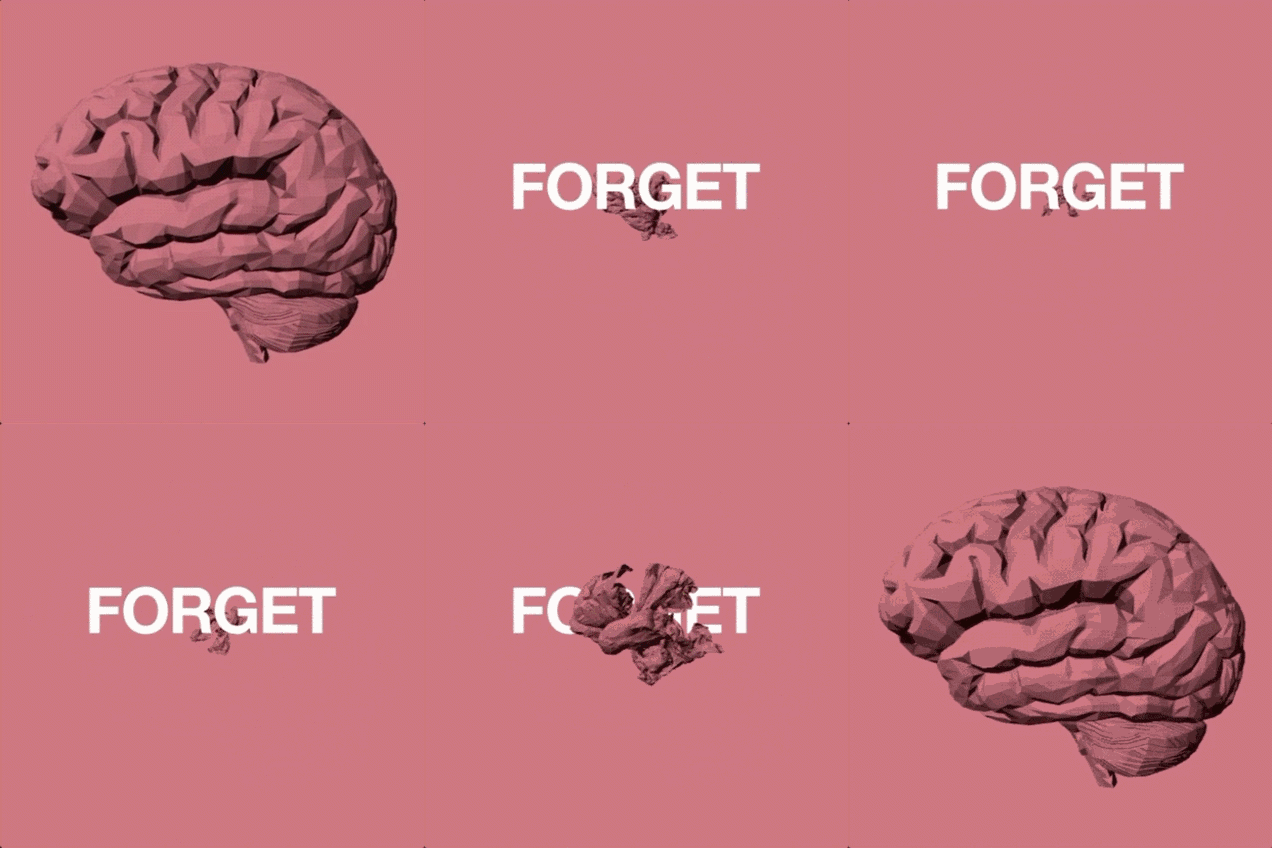
Forgetting and remembering — when should forgetting be encouraged?
Our brains are wired to remember. It's one of the ways they've helped humans survive for thousands of years — keeping hold
of dangers, unfinished tasks, and important information. But just because the brain offers us a thought doesn't mean we have to engage with it. We can notice it, acknowledge it, and choose to return our attention to the present moment.
Unknown
We believe that having a good memory is always a positive thing, but there are times when remembering isn’t actually helpful. For example when we want to focus on one task, our minds will
suddenly remind us of an email we haven’t sent, a conversation we had yesterday, or something we need to add to the shopping list! Or — and this is me at the moment — get into bed, start to focus on my breath and relaxing, and my brain suddenly decides that now is the perfect moment to replay the day’s events or I start to think about everything I have to do the next day.
Our minds are generally good at remembering. They are designed that way. The brain is constantly scanning
for unfinished business, potential problems, things it believes are important enough not to forget — the problem is it doesn’t always choose the right moment.
So if we are trying to switch off, relax, rest our mind and body, it often becomes really difficult to stop those thoughts. The challenge therefore is to recognise when the attention starts to wander, the possible letting go of what has captured it, and returning to where you want your attention to be. This is
where the art of forgetting what your mind has just remembered comes into play — mindfulness.
The practice of forgetting is as simple as noticing that your thoughts are drifting, and then bringing them back to a focal point. This focal point can be your breath, the sensations in your body, or the present moment in whatever you are doing.
This will help to strengthen your ability to direct your attention rather than being directed by every passing
thought. In meditation, this is sometimes referred to as grounding.
It doesn’t mean that whatever we are remembering is unimportant, it means that we can start to trust that they don’t need your attention right now.
If something genuinely needs action, write it down and come back to it later, this means you are giving your brain permission to park a thought, and this can be surprisingly freeing.
It is a skill, and
therefore takes practise. The first time you try you might find you are having to redirect your attention dozens of times, but it is worth it to keep going because every time you do it you are helping your mind become calmer and less reactive over time. Your ability to let go will develop, your nervous system has more opportunity to shift into its parasympathetic state — the body’s natural rest and restore mode. This will then help us to recover, sleep more deeply, think more clearly and
build resilience to stress.
This week, whenever your mind wanders, notice it, thank it for trying to help and then gently forget it … for now. It will still be there if it truly needs attention. In the meantime you will have given yourself something far more valuable, the opportunity to be fully present. The goal isn’t to stop remembering — it’s to choose where your attention rests and forget it.
Let’s start practising the art of
forgetting.
Have a good week everyone — keep looking, moving, and feeling good.
With love and support,
Jane xxx
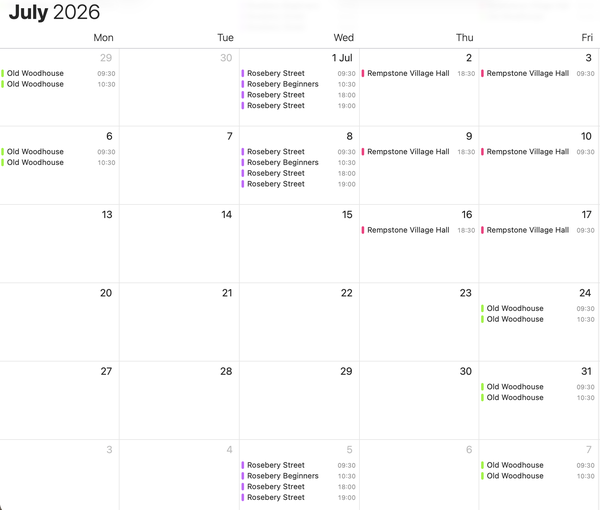
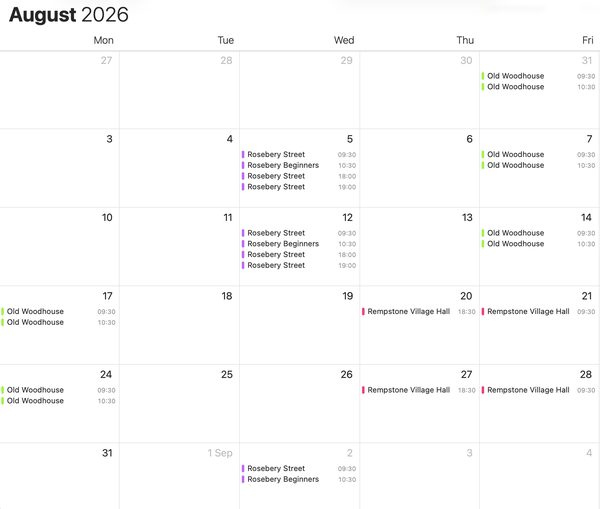
Summer Timetable of Face-to-Face Classes